How the programme supports students
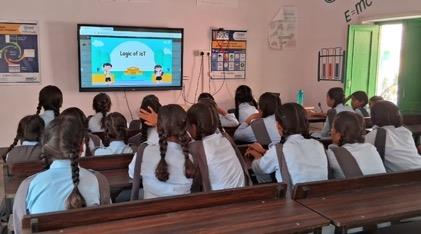
E-learning smart rooms use digital tools for interactive learning. Physics Wallah video lectures and tutorials are delivered on classroom Smart TVs.
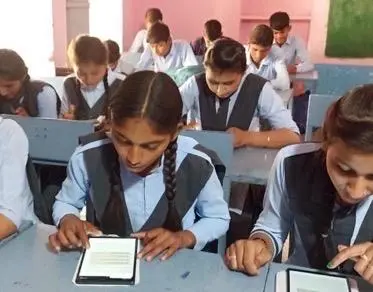
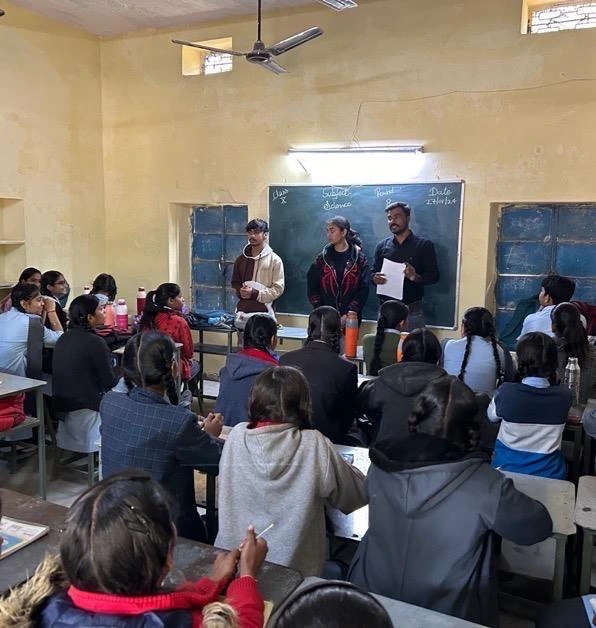
Targeted remedial classes support Grades IX–X in Science, Mathematics and English. Tablet assessments and the Samiksha app support continuous learning evaluation.
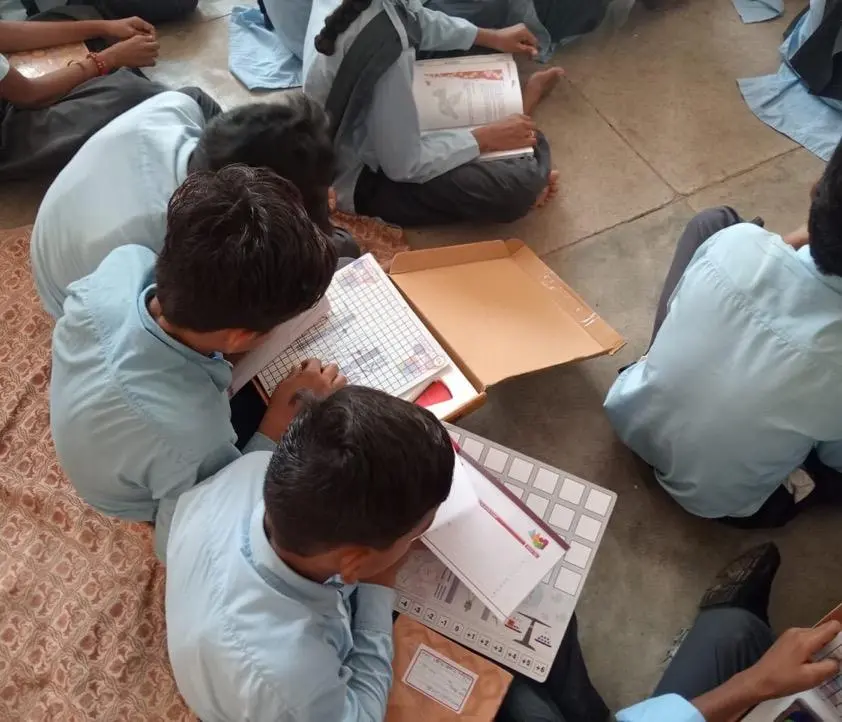
MathLab kits make mathematical concepts tangible through experiments. VR hand-tracking lets students safely explore NCERT science experiments.
Programme Overview
Adhyayan focuses on improving access to quality education and making classroom learning more engaging, accessible and effective for students in government schools.
The programme addresses learning gaps through audio-visual curriculum content, online classes, experiential learning, remedial academic support and specialised subject sessions.
Activities under Adhyayan include:
- Sameeksha: Digital Assessments
- Digital Empowerment: Online Classes
- Experiential Mathematics Learning: Math Lab
- Remedial Classes: Bridging the Education Gaps
- Supporting Schools: Python Sessions
- Virtual Reality Camp: Innovative Hands-On Learning with VR Box
- STEM for Girls
Sameeksha: Digital Assessments
PLATform - Personalized Learning, Assessment & Training
IN-DEED Foundation developed PLATform - Personalized Learning, Assessment & Training, an Edu-tech solution designed to conduct regular digital assessments and track individual student performance.
Assessments are conducted through tablet-based multiple-choice assessments.
The assessments enable students to track their learning progress, identify areas requiring improvement, refine preparation strategies and approach examinations with greater confidence and readiness.
Reach
Digital Empowerment: Online Classes
In collaboration with various educational content partners, IN-DEED Foundation introduced high-quality audio-visual learning content in government schools to make classroom learning more engaging, accessible and effective.
During the academic session 2025–26, the programme reached 45+ schools and 2,500+ students across four districts of Rajasthan.
A total of 15 Smart TVs and 31 curriculum-aligned digital content resources were installed, providing students from Grades I–XII with access to engaging learning material, particularly in schools where subject-specific teachers were unavailable.
Cumulatively in the past three years:
- TVs install: 25
- Online curriculum installed in TVs: 80+
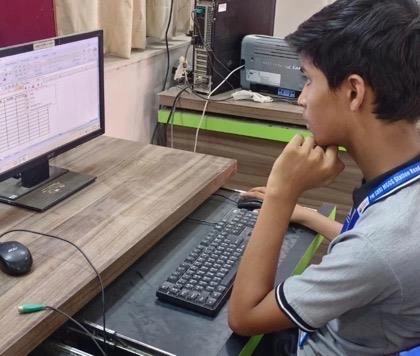
- Computer Labs installed: 8 labs, 50+ working computers
- Individual learning app access: 800+ students
Teachers were trained to effectively integrate these resources into classroom learning, ensuring smooth utilisation, improving learning continuity and helping reduce learning gaps.
Key Benefits
- Bridged teacher gaps: Supported learning where subject teachers were unavailable.
- Engaging learning: Made concepts easier through audio-visual content.
- Learning continuity: Ensured uninterrupted access to quality learning resources.
- Wider access: Provided curriculum-aligned content for Grades I–XII.
- Digital exposure: Strengthened technology-enabled learning in schools.
Experiential Mathematics Learning: Math Lab
IN-DEED partnered with EduMEasy, a startup founded by IIT Jodhpur alumni and an REI Partner, to introduce experiential Math Lab activities in government schools.
The initiative addressed the need for more engaging and practical approaches to mathematics, particularly for students who find abstract mathematical concepts difficult to understand.
The programme benefited 350+ students.
Through hands-on experiments, visualisation and real-world applications, students were able to connect mathematical concepts with practical experiences rather than relying solely on textbook-based learning.
This approach made mathematics more interactive, enjoyable and easier to understand, while encouraging curiosity, logical thinking and greater confidence in learning the subject.
Remedial Classes: Bridging the Education Gaps
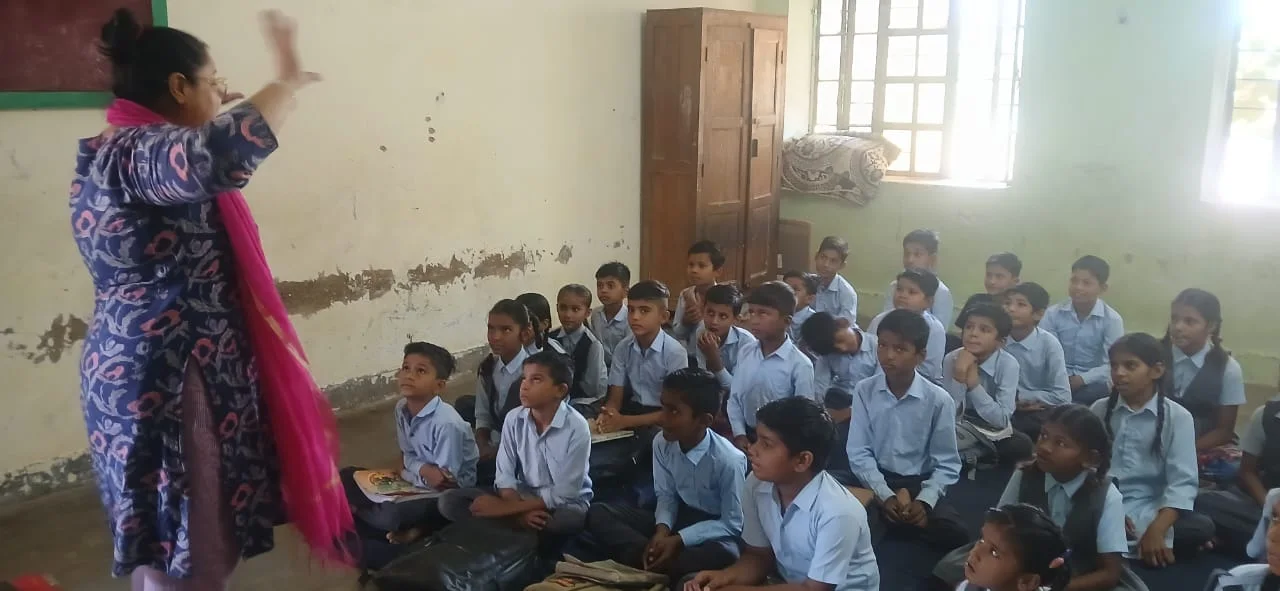
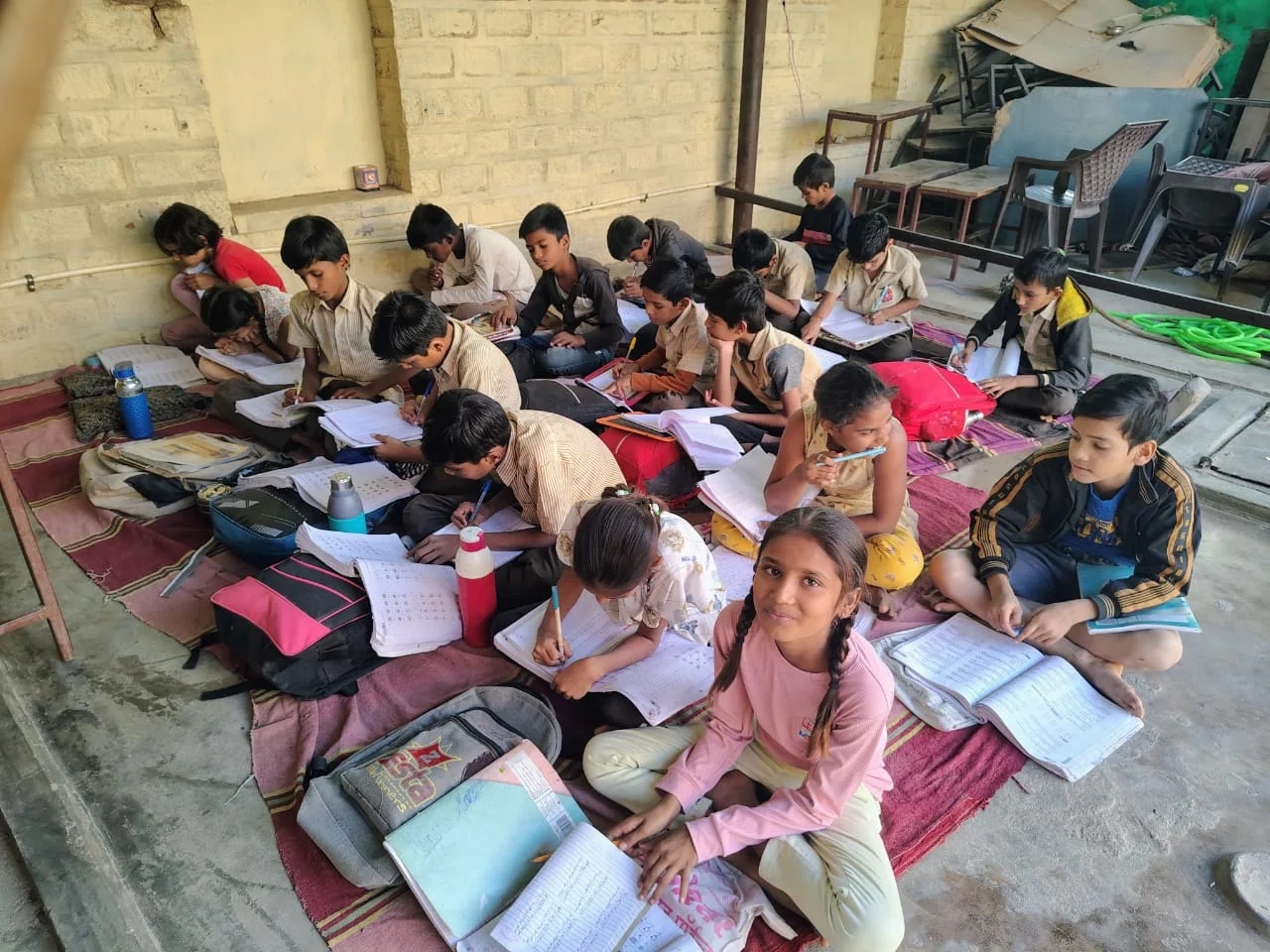
In many government schools, the absence of subject-specific teachers and experts can affect students’ academic performance.
Recognising this gap, the IN-DEED team engaged volunteers and subject experts to provide targeted academic support to students, benefiting 400+ students during the academic session 2025–26.
Although the intervention was conducted for only a few weeks, it resulted in measurable improvements in school performance.
At GSSS Sansi Colony, Jodhpur, the pass percentage increased from 60% to 94%, while at GSSS Bhatiyanadi, it improved from 75% to 100%.
These results demonstrate how targeted and timely interventions can create significant impact, particularly in schools where students face challenges in accessing even basic educational resources.
Supporting Schools: Python Sessions
Due to the shortage of qualified lecturers, students in Grades XI–XII who choose Computer Science as an optional subject often face challenges in completing their syllabus and developing programming skills.
To bridge this gap, the IN-DEED team conducted specialised Python programming sessions, benefiting 30+ students.
The intervention provided students with structured guidance and practical exposure, making it easier for them to pursue Computer Science and programming despite the absence of an appointed subject teacher.
Virtual Reality Camp: Innovative Hands-On Learning with VR Box
To transform science education in government schools, IN-DEED introduced VR hand-tracking technology, enabling students to conduct and explore science experiments in an immersive virtual environment.
The programme covered 1,500+ students across all four districts of Rajasthan, providing hands-on learning opportunities to students who have limited or no access to functional science laboratories.
The technology allows students and teachers to interact with virtual experiments through natural hand movements, without the need for physical controllers.
This initiative helps bridge laboratory access gaps and enables students to experience, explore and understand scientific concepts through practical learning.
STEM for Girls: Bicycle Distributions
Where distance and lack of resources once held girls back, their dreams have now gained new momentum and direction.
The bicycles were awarded to 250 girls from 27 government schools who, after passing their Class X board examinations, chose Science in Class XI—supporting their decision to continue education in this field.
Purpose of Distribution
- To reduce travel challenges and encourage regular school attendance.
- To build confidence and independence among girls.
- To inspire other girls to choose Science and continue their education.
- To create role models within communities.
For students from rural areas, these bicycles are more than a gift; they are a lifeline, making the journey to education easier and encouraging them to move forward with confidence.