How the programme supports students
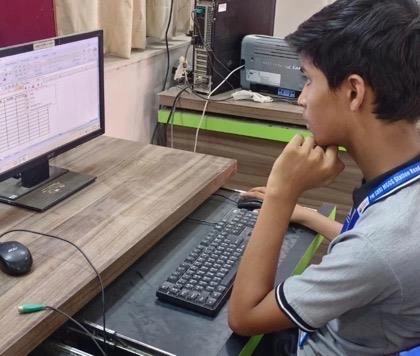
Practical computer sessions develop proficiency in Word, Excel and PowerPoint. Coding lessons build programming skills and logical thinking, while robotics kits support hands-on experimentation.
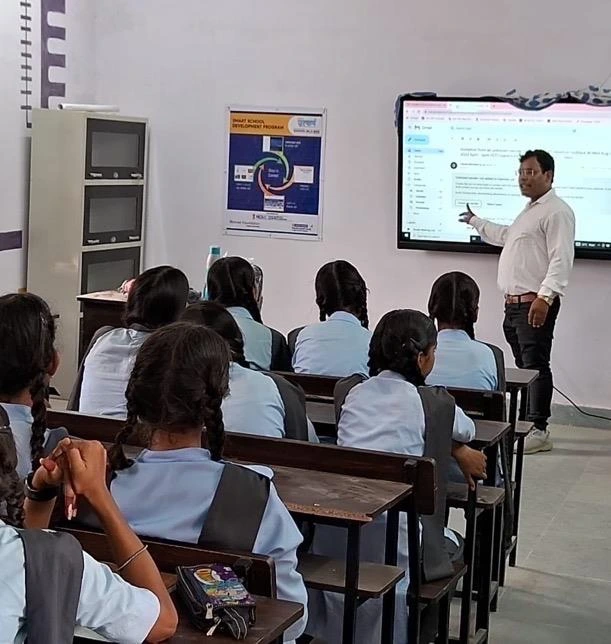
AI awareness sessions introduce artificial intelligence, effective prompting and its use in curricular learning.
Programme Overview
e-Kaushal provides government school students with opportunities to develop computer literacy, digital skills, coding, robotics, artificial intelligence and technology-based problem-solving skills.
The programme includes:
- Computer Literacy
- Computer Literacy & Coding Camps
- Coding for Kids
- Robotics Camps & Student Projects
Computer Literacy
Computer Literacy: the underlying report labels this section 2024–25; these results are shown separately from the 2025–26 headline figures.
IN-DEED introduced students to essential computer literacy and digital skills, recognising their growing importance in an increasingly digital and AI-driven world.
The programme provided students with hands-on exposure to computers, internet use and essential productivity tools.
To ensure that limited infrastructure did not restrict learning, the team also carried laptops to schools without functional computer labs, enabling students to receive practical, hands-on learning without compromising the quality of training.
Training Topics
- Basic Computer Skills: Introduction to computers and their components, input/output devices, hardware and software, files and folders, and basic computer operations.
- MS Office: MS Word, Excel and PowerPoint; creating documents, spreadsheets and presentations.
- Internet & Digital Safety: Web browsers, search engines, email creation, information search and verification, and safe and responsible internet use.
Reach
1,500+ students across 15+ schools
Learning Outcomes
Baseline and endline analysis recorded:
- Basic computer knowledge increased from 48.7% to 76.5%.
- Awareness of internet dangers such as cybercrime and knowledge of how to report them increased from 35.7% to 62%.
- Knowledge of MS Office increased from 44% to 74%.
One of the key impacts observed by the team was the growing curiosity and enthusiasm among students- many eagerly waited for computer sessions and were excited to use the computers as soon as they entered the lab.
Computer Literacy & Coding Camps
To extend digital learning opportunities to students in remote and rural government schools, IN-DEED organised 7 Computer Literacy & Coding Camps, conducted over periods ranging from 3–10 days.
Approximately 600+ students benefited.
Students received practical, hands-on exposure to computers, ensuring that limited access to functional computer laboratories did not restrict opportunities to develop foundational digital skills.
Coding for Kids
The programme aims to foster innovation, curiosity, critical thinking and problem-solving skills among students.
Through hands-on exposure to robotics, artificial intelligence and coding, students learn to apply technology to real-world challenges.
During the academic session 2025–26, the programme covered 10+ schools and 1,000+ students.
To extend its reach to more students, the IN-DEED team also organised Robotics Camps, providing hands-on learning opportunities to students in schools with limited access to such exposure.
Key Robotics & Technology Skills Covered
- Robotics Fundamentals: Understanding robots, their components and real-world applications.
- Sensors & Actuators: Learning how sensors detect inputs and how motors/actuators enable movement.
- Block-Based Coding: Developing basic programming and logical thinking through visual coding.
- Robot Assembly & Control: Building simple robotic models and programming them to perform specific tasks.
- Problem-Solving & Innovation: Designing solutions to simple real-world problems through STEM-based projects.
- AI Awareness: Introduction to artificial intelligence, its applications and its role in everyday life.
Robotics Camps & Student Projects
Students gained practical experience in building functional robotic projects and applying programming concepts through hands-on activities.
Projects developed included:
- Automatic Attendance System
- Wi-Fi Controlled Car
- Mobile Alert Irrigation System
- Smart City Model
- Fire-Fighting Robot
A total of 1,024 students were assessed to track their learning progress and understanding of key concepts.
During the programme, students developed 471 block-coding and robotics projects, demonstrating their ability to apply programming concepts through hands-on activities.
Scratch-based projects made coding more engaging and interactive, enabling students to create games, animations and activities while developing logical thinking and problem-solving skills.
5% of the students demonstrated exceptional performance, reflecting strong learning outcomes and proficiency in the course.